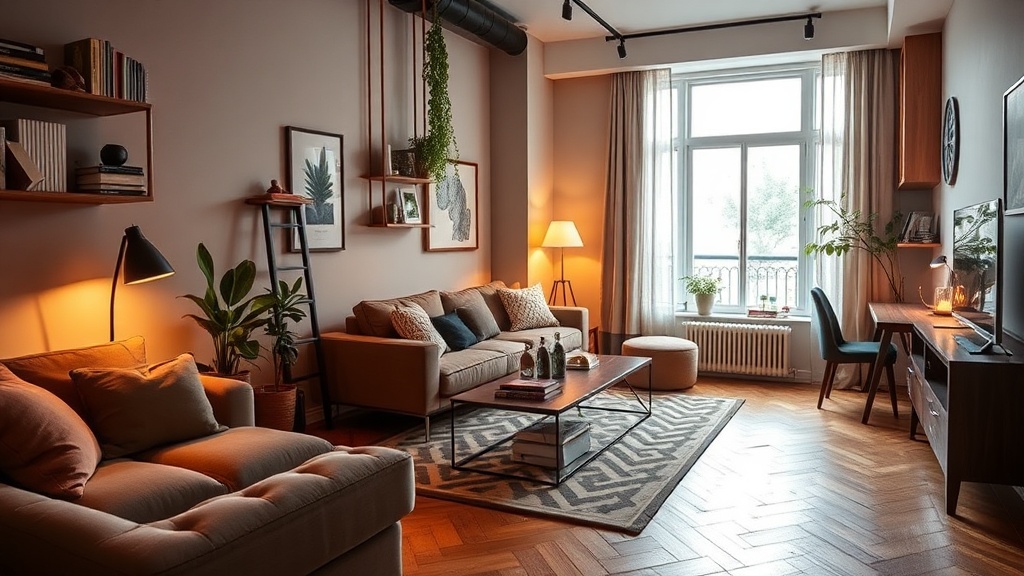
5 Genius Ways to Make Your Tiny Apartment Feel Spacious

Vertical Storage Solutions That Double Your Space
Multi-Functional Furniture for Compact Living
Mirror Placement Tricks to Create Depth
Clever Closet Organization Systems
Lighting Strategies That Open Up Any Room
Living in a small apartment doesn't mean resigning to cramped quarters and clutter. This post breaks down five practical, budget-friendly strategies that transform tight spaces into airy, functional homes. Whether you're in a studio downtown or a one-bedroom with a shoebox layout, these tips work without major renovations or breaking the bank.
Why Do Small Apartments Feel So Cramped in the First Place?
The psychology of space has everything to do with visual clutter and poor lighting. When every surface holds something—mail, chargers, that pile of shoes by the door—the brain registers chaos. Low ceilings, dark paint, and bulky furniture compound the problem. The good news? You don't need a bigger apartment to feel like you've got one.
The fix starts with understanding how the eye travels through a room. Horizontal lines widen. Vertical lines lengthen. Mirrors double what you see. Color temperature matters—warm whites make walls recede while harsh fluorescents advance them. Here's the thing: most cramped-feeling apartments suffer from fixable design choices, not actual square footage limitations.
Before diving into the five methods below, take inventory of what you're working with. Measure doorways before buying furniture (a common mistake). Note where natural light hits during the day. Identify your apartment's best feature—a view, high ceilings, original molding—and build around it.
How Can Mirrors Make a Tiny Room Look Bigger?
Mirrors create the illusion of depth by reflecting light and views, essentially doubling the visual space in any room. When positioned across from windows, they bounce daylight into dark corners and make walls disappear.
But not all mirror placement works equally well. A small decorative mirror above the sofa looks nice but does little. The real magic happens with oversized floor mirrors—think IKEA's HOVET at 30 inches wide and 77 inches tall. Leaned against a wall (never hung in rental spaces with iffy drywall), it adds vertical emphasis and reflects the entire room back at you.
Placement tips that actually work:
- Position mirrors perpendicular to windows—not directly across—to avoid bouncing harsh light back outside
- Group smaller mirrors gallery-style to create a feature wall that expands visually
- Use mirrored furniture sparingly—a coffee table with a mirror top adds sparkle without overwhelming
The catch? Mirrors facing cluttered areas amplify mess. That pile of laundry on the couch? Now there's two piles. Keep what mirrors reflect intentional and clean. In a studio apartment, consider placing a full-length mirror near the entry to create a sense of arrival and transition between spaces.
What Paint Colors Make Small Spaces Feel Larger?
Light, airy colors with cool undertones—soft whites, pale grays, muted blues—make walls appear to recede, visually pushing room boundaries outward. Dark colors advance, making spaces feel enclosed (which can work if that's the cozy vibe you're after, but it's the opposite of spacious).
Benjamin Moore's "Chantilly Lace" and Sherwin-Williams' "Alabaster" are go-to whites for small spaces. They read clean without that sterile hospital feeling. For something with more personality, Farrow & Ball's "Skylight" adds subtle blue-gray depth that shifts beautifully throughout the day.
Here's where most people go wrong: they paint the ceiling white and walls color. Reverse it. A pale ceiling (try Benjamin Moore "Ceiling White" with its slight pink undertone) paired with slightly deeper walls draws the eye upward, emphasizing height over floor footprint. Crown molding painted the same color as the walls (not white) eliminates visual breaks that chop up the space.
Worth noting: matte finishes hide imperfections but can look flat. Eggshell or satin reflects just enough light to add dimension without glare. In rentals where painting isn't an option, removable wallpaper from Tempaper offers the same effect—just check reviews for actual removability claims before committing.
Which Furniture Choices Actually Save Space?
Multi-functional, visually lightweight pieces with exposed legs outperform bulky storage-heavy furniture in small apartments every time. The goal isn't maximizing what you own—it's maximizing what you can do with minimal visual weight.
| Furniture Type | Space-Eating Choice | Space-Saving Alternative |
|---|---|---|
| Sofa | Overstuffed sectional with skirt | Mid-century modern with tapered legs (Article "Sven" or West Elm "Hamilton") |
| Bed | Platform with solid sides | Storage bed with lift mechanism or simple metal frame showing floor underneath |
| Dining | Four-person table with arms | Round pedestal table with backless stools that tuck underneath |
| Storage | Wardrobe with solid doors | Open clothing rack or etagere shelving that maintains sight lines |
The West Elm "Mid-Century Pop-Up Storage Coffee Table" exemplifies smart dual-use design—lift-top reveals storage, but the slender tapered legs keep it from looking like a tank parked in your living room. Similarly, Resource Furniture's wall-bed systems ( pricey but worth studying for the engineering) demonstrate how vertical real estate trumps floor space.
That said, don't fall for "apartment-sized" furniture that looks like it belongs in a dollhouse. One normal-sized sofa beats two tiny loveseats crammed together. Scale matters—measure your space, then subtract three feet for walking paths before shopping.
How Do You Hide Clutter Without Buying More Stuff?
The "one in, one out" rule sounds virtuous but fails in practice—life's too chaotic for that level of discipline. Instead, build hiding spots into existing furniture and adopt visual grouping techniques that turn chaos into intentional display.
Under-bed storage containers (The Container Store's "Under Bed Box" with wheels) handle off-season clothing and extra linens. Over-door organizers aren't just for shoes—use clear pockets for cleaning supplies, craft materials, or that overwhelming cord collection. Tension rods inside cabinets create vertical storage for pot lids, cutting boards, and baking sheets that otherwise become Jenga towers.
Here's the thing about open shelving: it only works when everything on it shares a visual theme. Mix books, plants, and ceramic objects—not books, mail, and random electronics. Corral small items into trays (Target's "Project 62" line offers affordable options) that signal "this grouping is intentional." Even a messy coffee table looks styled when contained to a single tray.
Digital clutter counts too. Cable management boxes (like the DMoose Cable Management Box) hide power strips and adapters that snake across floors. Adhesive hooks behind furniture keep cords improved and invisible. In the kitchen, magnetic knife strips and hanging pot racks free cabinet space while keeping tools accessible.
Can Lighting Really Change How Big a Room Feels?
Layered lighting—ambient, task, and accent—eliminates harsh shadows that visually chop up space, creating depth and dimension that makes rooms feel larger than they are. A single overhead fixture flattens everything; multiple light sources at varying heights add complexity and interest.
Start with ambient light: if your rental has overhead fluorescents, consider swapping the bulb for a warmer LED (2700K temperature) or adding a dimmer switch (Leviton makes renter-friendly options that don't require rewiring). Next, add task lighting—adjustable floor lamps like the IKEA "NYMÅNE" direct light exactly where needed without consuming table space.
Accent lighting provides the real magic. LED strip lights behind the TV or under kitchen cabinets add glow without glare. Uplighting—pointing fixtures at the ceiling—draws eyes upward and emphasizes vertical space. Philips Hue and similar smart bulbs let you adjust color temperature throughout the day: cooler and brighter for morning energy, warmer and dimmer for evening wind-down.
That said, don't overdo it. Too many light sources create visual noise. Aim for three distinct types in each room, positioned at different heights. And embrace candles—real or LED—for the softest, most flattering light that makes any space feel intentionally designed rather than merely functional.
Small apartments reward intentionality. Every piece earns its place. Every color choice either expands or contracts the space. The five strategies above—strategic mirrors, light paint colors, smart furniture selection, hidden storage, and layered lighting—work together or independently. Pick one to tackle this weekend. Notice the difference. Then layer in the next. Before long, that tiny apartment feels less like a constraint and more like a perfectly scaled home.