
The One Habit That Quietly Fixes Your Entire Day in the City

Quick Tip
Reset your space before you leave it—if it takes under 60 seconds, do it immediately.
There’s a specific kind of chaos that comes with city living. It’s not dramatic. It’s not cinematic. It’s small, constant, and exhausting—missed buses, cluttered counters, half-finished errands, and that low-level feeling that you’re always behind.
Here’s the uncomfortable truth: most people try to fix this with bigger systems. New apps. New planners. New routines they abandon in three days.
The fix is smaller than that. Almost annoyingly small.
The habit: reset your space before you move on.

What “reset your space” actually means
This isn’t about becoming obsessively tidy. It’s not about deep cleaning or turning your apartment into a showroom.
It means one simple rule: before you leave a space, you bring it back to neutral.
Finished your coffee? Rinse the mug. Worked at your desk? Clear it. Got dressed? Put away what you didn’t wear.
No piles. No “I’ll deal with it later.” No mental IOUs.
You close the loop immediately.
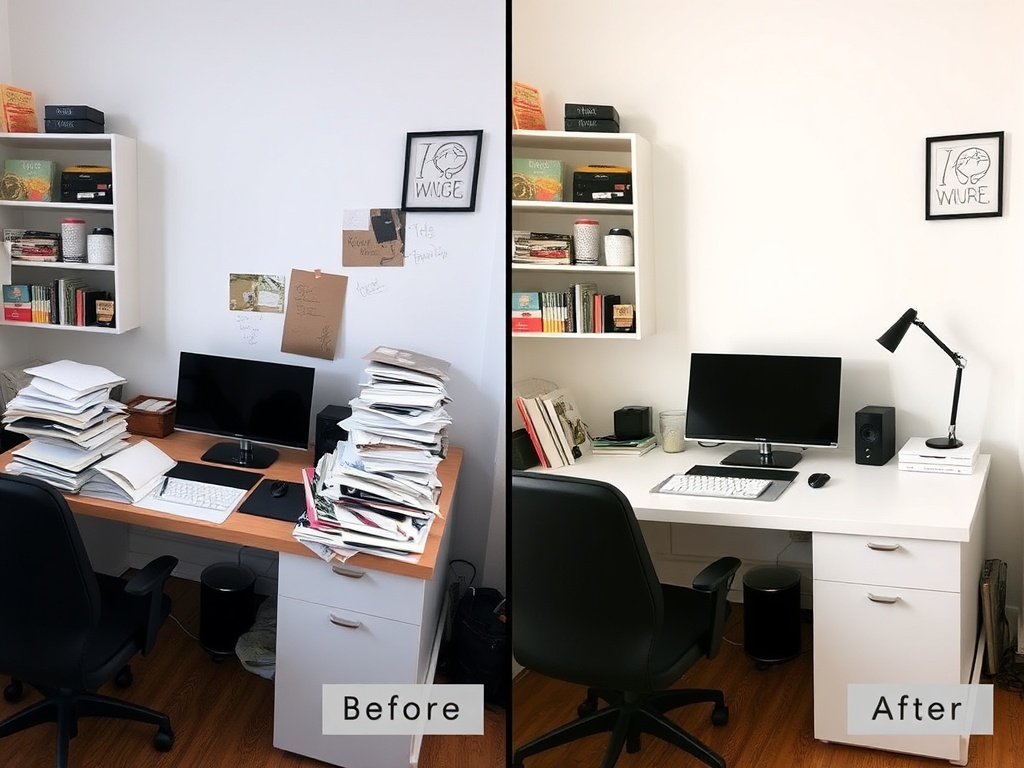
Why this works (and why most advice doesn’t)
Most productivity advice assumes you have extra time and energy. City life doesn’t work like that. Your day gets fragmented—commutes, noise, interruptions, unexpected delays.
This habit works because it removes friction before it compounds.
- You don’t wake up to yesterday’s mess.
- You don’t stack decisions on top of decisions.
- You don’t carry visual stress from room to room.
It’s not about discipline. It’s about reducing future resistance.

The hidden benefit: mental clarity you can feel
Clutter isn’t just physical. It’s cognitive. Every unfinished task sits in your brain like an open tab.
When your environment is constantly half-done, your attention follows the same pattern.
But when you reset spaces as you go, something subtle shifts:
- Your brain stops scanning for loose ends
- You transition between tasks faster
- You feel oddly “caught up,” even on busy days
It’s not productivity in the hustle sense. It’s relief.

How to actually make this stick (without overthinking it)
This is where people usually mess it up—they try to formalize it too much.
Don’t build a system. Build a trigger.
Use this rule: if it takes less than 60 seconds, you do it immediately.
That’s it.
Not 5 minutes. Not “when I have time.” Sixty seconds is short enough that your brain won’t argue.
Examples:
- Wipe the counter after making toast
- Hang your jacket instead of dropping it
- Put dishes directly into the dishwasher
- Fold the blanket when you get off the couch
You’re not cleaning your life. You’re preventing it from unraveling.

The city-specific advantage
This habit matters more in a city than anywhere else.
Why? Because your space is smaller—and your margin for chaos is thinner.
In a suburban house, clutter can hide. In a city apartment, it multiplies.
One messy surface becomes the whole room. One unfinished task becomes your entire mood.
Resetting your space keeps your environment proportional to your life—not your stress.

What happens after a week
You won’t notice it immediately. That’s the point.
But after a few days, you’ll start to feel it:
- Your mornings are quieter
- You spend less time “getting ready to start”
- Your space feels bigger than it is
And the biggest one—your day stops feeling like a recovery mission.

What this habit is NOT
Let’s be clear:
- It’s not perfectionism
- It’s not aesthetic minimalism
- It’s not a personality change
You can still be messy. You can still have busy days. You can still ignore the laundry sometimes.
This just removes the baseline chaos that makes everything harder than it needs to be.

The one-line takeaway
Don’t leave a space worse than you found it.
That’s it. That’s the entire system.
It doesn’t require motivation. It doesn’t require tracking. It doesn’t require willpower beyond a few seconds at a time.
But it compounds—quietly, consistently, and in ways you’ll feel more than you’ll notice.
City life isn’t going to slow down for you. But your environment can stop working against you.
And that changes everything.